
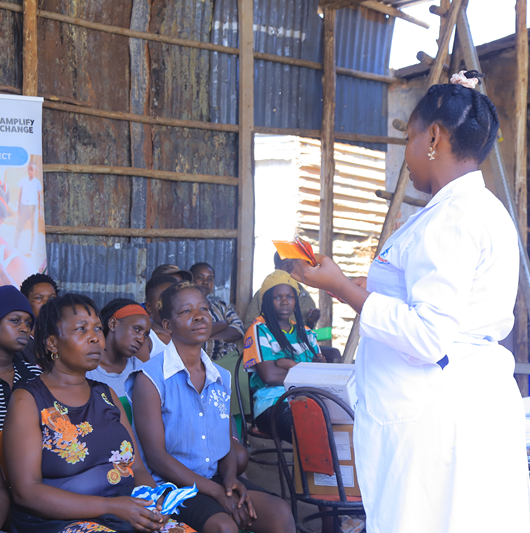
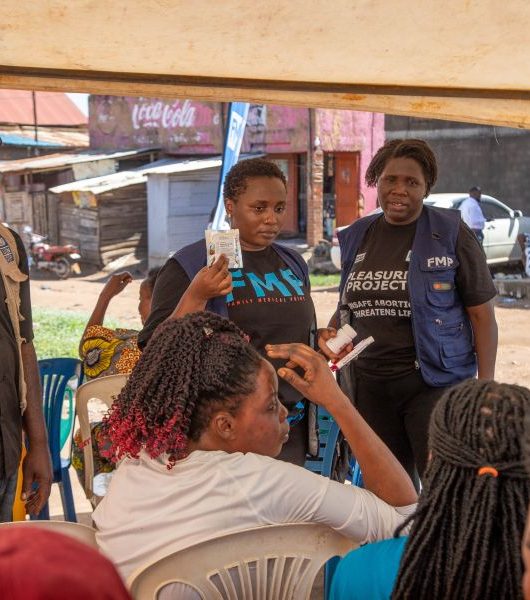
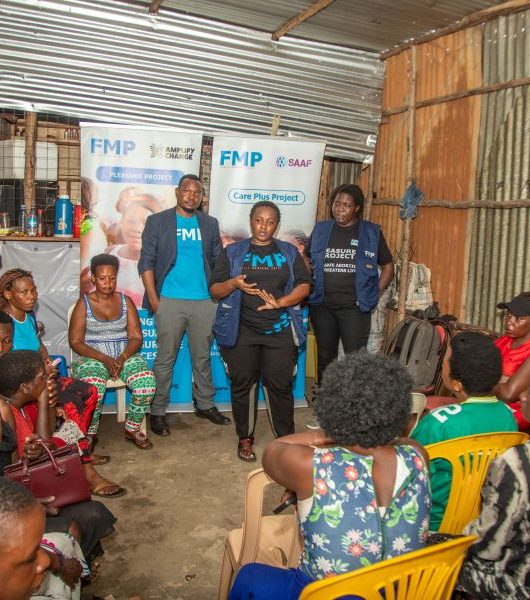

Throughout November and December 2025, our team led by Dr. Barbra Tiisa is conducting partner visits across four fishing communities: Nakiwongo, Kigungu, Kasenyi, and Guuda. These visits are part of our ongoing partnership with clinics and drug shops to strengthen the quality of comprehensive Sexual and Reproductive Health and Rights (SRHR) services in the landing sites along the shores of Lake Victoria in Wakiso District, Uganda.
During one of the visits, a service provider shared his experience of how he previously relied on boiling equipment in water for sterilization. He explained that since receiving an autoclave from FMP, his work has become easier, faster, and significantly safer for both clients and providers.

An autoclave is essential in clinical settings because it ensures effective sterilization, eliminates harmful microorganisms, prevents infections, and improves overall patient safety standards that simple boiling often cannot consistently meet.
In addition to equipment support, our team also provides refresher training for service providers on proper documentation and strengthens their capacity to deliver high quality SRHR services.
“I used to fear offering long-term contraceptives to women, but ever since the FMP team trained me, I feel proud that I am now able to support women in my community with the contraceptive of their choice.” Nurse Enos.

Women in fishing communities including sex workers continue to encounter barriers in accessing SRHR services. These challenges include long distances to public health facilities, seasonal flooding that limits movement, and stigma associated with their work or the services they seek.
By building the capacity of health service providers within these communities, FMP is helping to bridge gaps in healthcare access, improve service quality, and ensure that women and other vulnerable groups can receive respectful, safe, and reliable SRHR services closer to where they live and work.